Feb 21, 2014 | Advocacy, News, Non-legal submissions
The ICJ and other human rights organizations issued a public statement calling on Spanish lawmakers not to pass draft legislation that, if approved, would seriously limit Spanish courts’ ability to investigate and prosecute serious crimes under international law.
The draft legislation, tabled in Parliament by the Popular Party (PP), provides that, for cases involving allegations of genocide, crimes against humanity and war crimes not occurring on Spanish territory to be investigated and prosecuted in Spain, the suspect must either be a Spanish national or a foreigner habitually resident in Spain or a foreigner who is in Spain, whose extradition has been denied by Spanish authorities.
For case of torture and enforced disappearance, the proposed legislation requires that the suspect be a Spanish national or, alternatively, that the victim be a Spanish national at the time when the crime was committed and that the suspect be present in Spain when jurisdiction is assumed.
Where these conditions are not met, the proposal would allow Spanish courts to hear cases for those crimes for which prosecution is required by international treaties where the suspect is a foreigner on Spanish soil, so long as Spain has received and denied an extradition request.
The ICJ and other organizations stressed in their statement that if enacted, this legislation would close the doors of Spanish courts to certain victims of gross human rights violations who are unlikely otherwise to be able to obtain justice, particularly within their own jurisdictions.
Spain-Universaljurisdiction-NGOsJointStatement-2014-eng (download the joint statement in English)
Spain-Universaljurisdiction-NGOsJointStatement-2014-SPA (download the joint statement in Spanish)
Oct 11, 2011 | Events
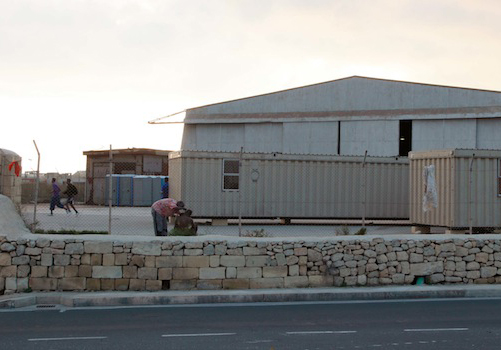
On 29 September, the ICJ, the Maltese NGO “aditus”, and the UNCHR office in Malta organized these trainings with the support of the European Commission Representation in the country.
The trainings targeted stakeholders working with migrants, asylum seekers and refugees, as well as those not working with these groups.
The topics covered included general human rights principles, international refugee law, human rights in Malta, detention of migrants and economic, social and cultural rights. The primary aims of the trainings were to facilitate migrant mainstreaming and the promotion of a rights-based approach to migrant issues.”

Sep 29, 2011 | Events
The ICJ, in collaboration with Citizens for Justice and the Judiciary of Malawi will host on 27 – 29 September 2011 a Judicial Symposium on the Role of the Judiciary in the Enforcement of Economic, Social and Cultural Rights.
The symposium, to be held in Mangochi, aims to bring together judges from Malawi and the their peers from the SADC region and legal experts in the field of ESC rights to discuss on their role in the domestic implementation and enforcement of ESC rights. It is expected that at the end of the symposium, Malawian judges and magistrates will have acquired enhanced practical understanding of international ESC rights protection and ESC rights adjudication. This will significantly enhance victims’ access to justice and effective remedies and considerably increase public confidence in the role of judicial actors regarding ESC righ
Malawi-concept note-event-2011 (full text, PDF)
Malawi-enforcment of economic social and cultural rights-event-2011 (full text, PDF)

Sep 29, 2011 | News
 28 September 2011 marks the ten year anniversary of the adoption by the UN Security Council of its resolution 1373 concerning measures to combat terrorism, which resulted in a proliferation of counter-terrorism legislation.
In a statement delivered that day to the Organization for Security and Co-operation in Europe during its annual Human Dimension Implementation Meeting, the ICJ’s Dr Alex Conte identified ten key lessons learnt over the last decade of focused attention on the countering of terrorism and the relationship this has had with national, regional and international human rights law.
A decade on counter-terrorismweb story-2011

Sep 21, 2011 | Advocacy, Non-legal submissions
The UN Human Rights Council adopted the outcome document of the Universal Periodic Review (UPR) of Belgium.
The ICJ made a statement during this adoption process, urging the implementation of recommendations accepted by Belgium related to protecting the rights of asylum seekers.
It also called for the formal abolition by Belgium of mechanisms of automatic expulsion that fail to take into consideration the principle of non-refoulement, and urged Belgium to reconsider its decision to reject the recommendation of the UPR Working Group that Belgium accede to the International Convention on the Protection of the Rights of Migrant Workers and their Families.
Belgim-ICJ oral interventipn-non-judicial submission-2011